Specialized in the sale of robotic products! educational robots, toy robots, connected objects
- Home >
- Educational Robots >
- MatataStudio > VinciBot Coding Robot MatataStudio

VinciBot Coding Robot MatataStudio
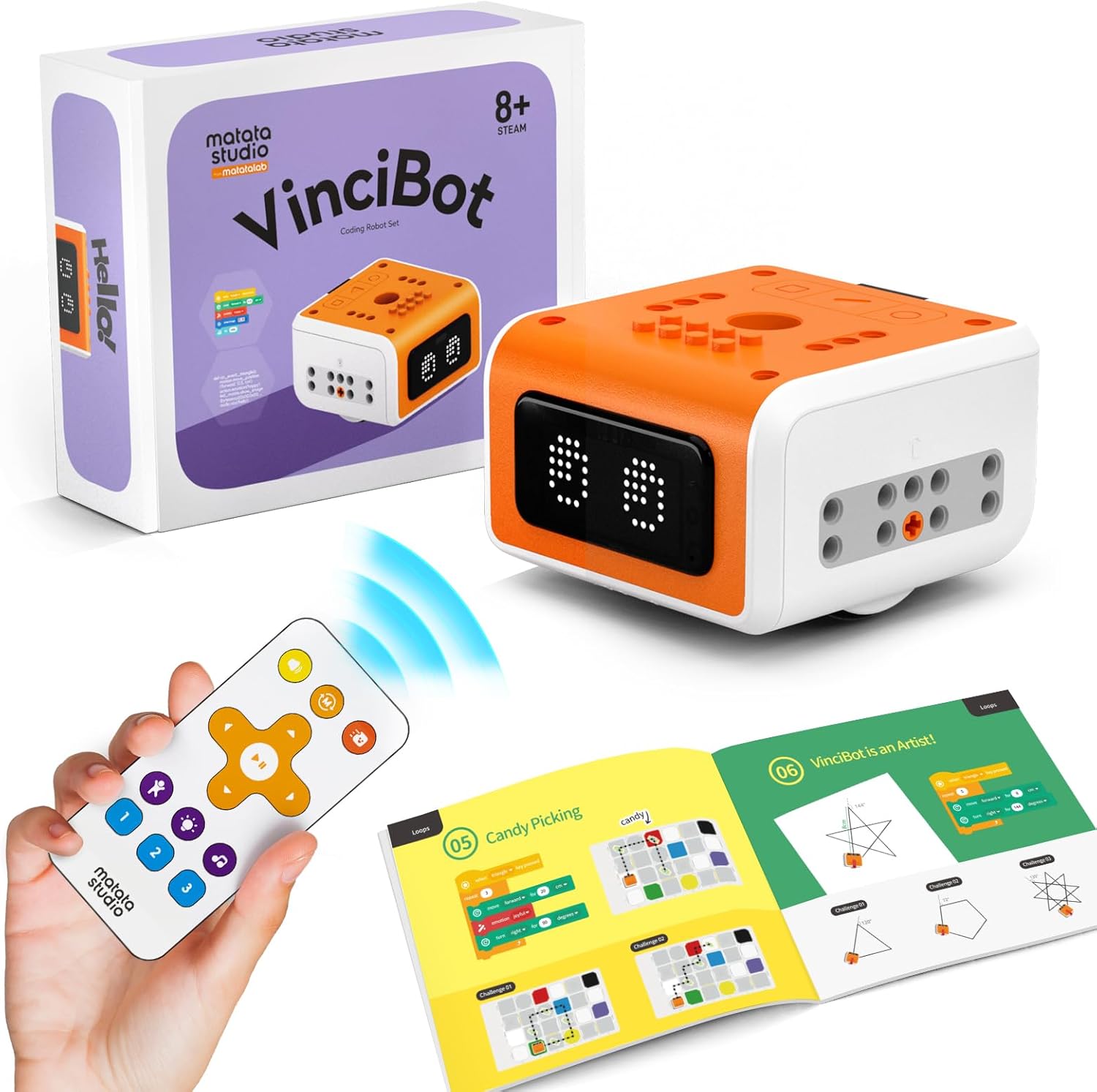
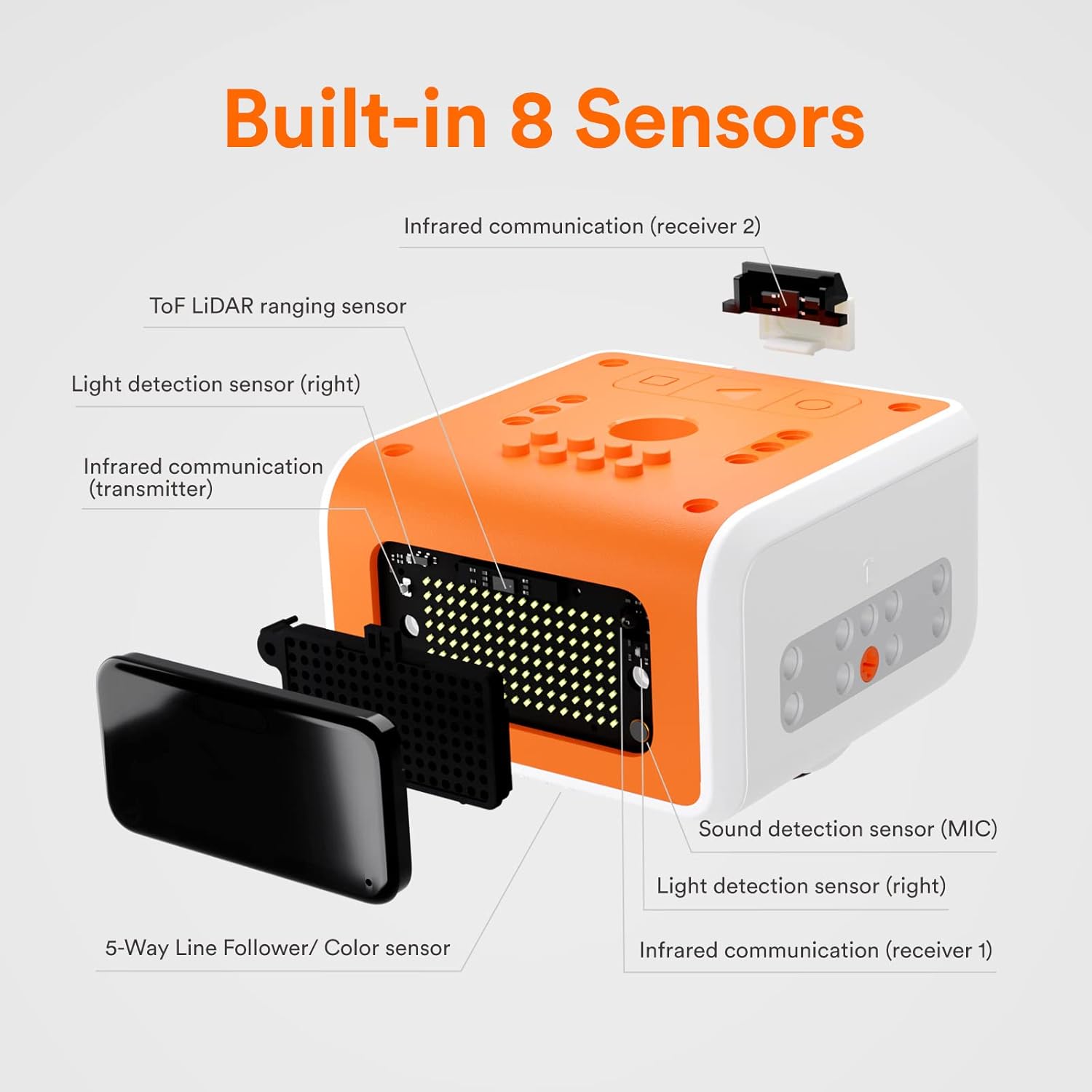
The VinciBot MatataStudio is an educational robot for children aged 8 and over, featuring 8 sensors, 3 pre-configured modes that can be used without coding, Scratch and Python programming, TinyML, IoT and over 4 hours’ battery life on a 1500 mAh battery.
Compatible with LEGO and third-party modules, can be combined with other VinciBots, comes with 17 coding scenarios and access to over 75 guided activities on vinci.matatastudio.com.
MatataStudio VinciBot: Scratch and Python coding robot with 8 sensors, AI, IoT and TinyML
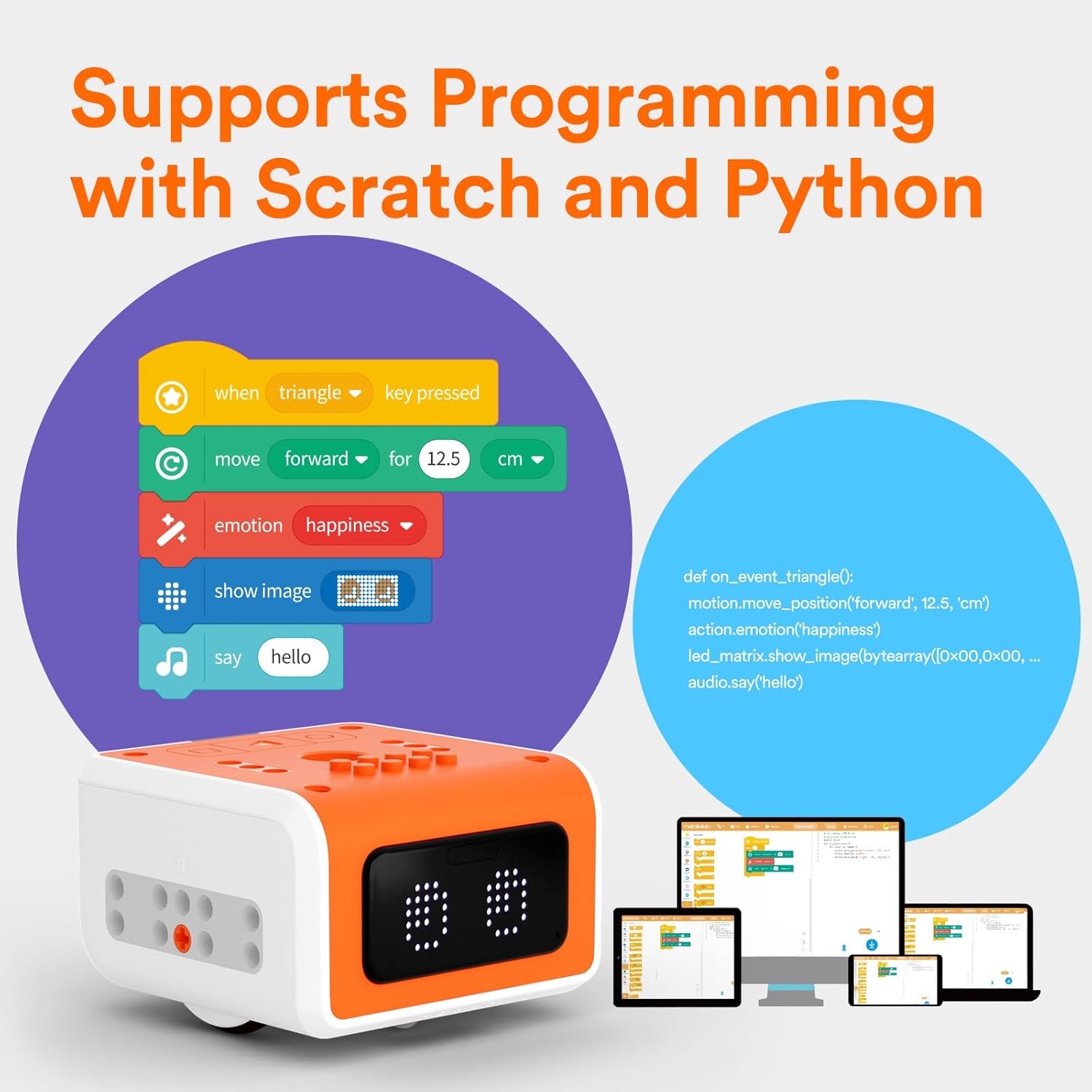
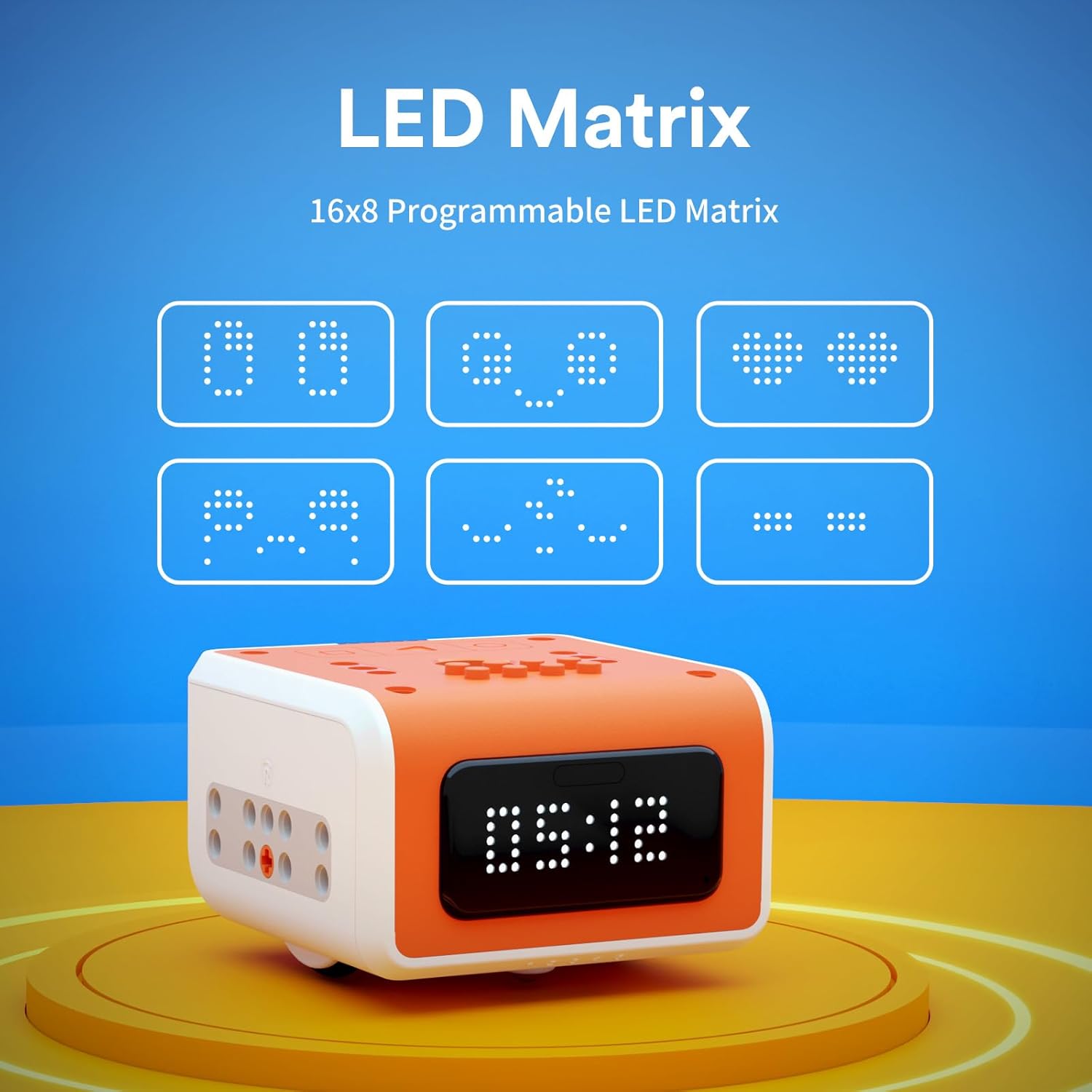
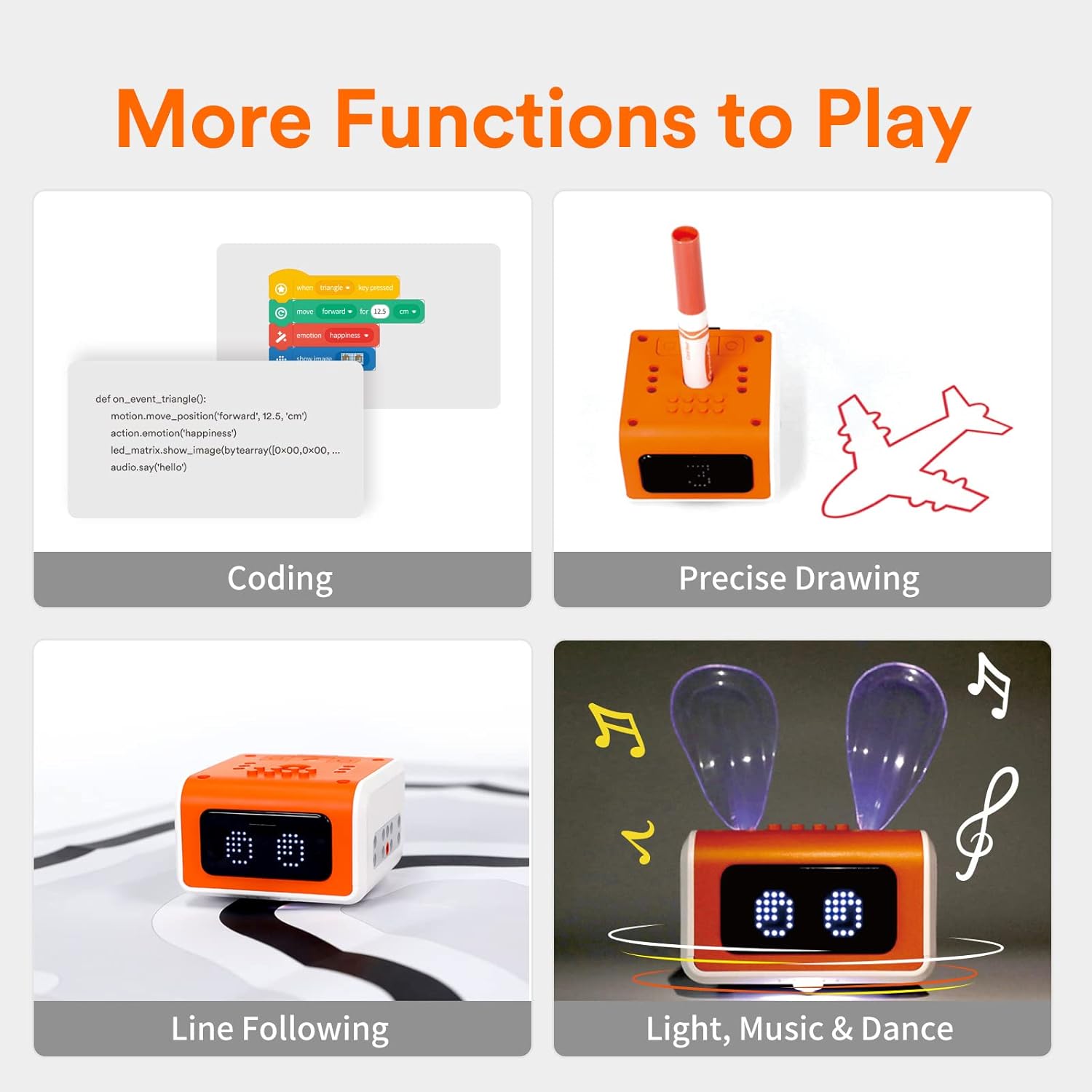
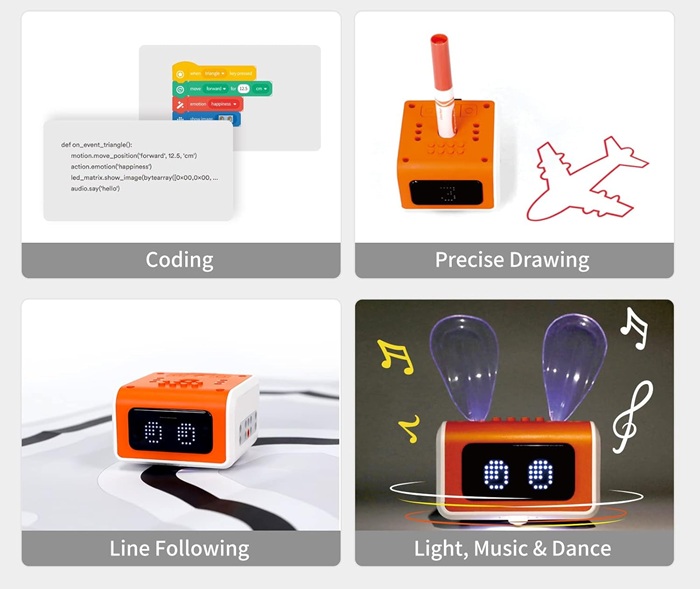
The MatataStudio VinciBot is an educational robot for children aged 8 and over, covering block-based programming with Scratch, the Python language, AI, TinyML and IoT via the online platform vinci.matatastudio.com. It features 8 sensors, an LED matrix, a patented RGB structure, 21 musical instrument sounds and an erasable marker for precision drawing. Three modes are pre-configured and can be used straight away without any coding knowledge: line following, precision drawing and infrared remote control.
Its 1500 mAh battery provides over 4 hours of runtime. It is compatible with LEGO bricks, Technic motors and third-party electronic modules. Several VinciBots can be combined to create shapes and collaborative projects. A booklet containing 17 coding scenarios is included in the box, and over 75 guided activities are available on the platform. The motor has been tested for 3,000 hours of use and the robot has passed over 20 professional certifications and tests, including 50,000 button-press tests.
VinciBot MatataStudio, 8 sensors, Scratch and Python, 3 ready-to-use modes, 4 hours’ battery life, 17 case studies included, and compatible with LEGO and TinyML – suitable for ages 8 and over.
What the VinciBot offers for learning robotics and AI from scratch to expert level
- 3 pre-configured modes that can be used without coding: line following, precision drawing and infrared remote control
- 8 sensors for detecting and interacting with the environment
- LED matrix and RGB structure for expressive, programmable visual effects
- 21 built-in musical instrument sounds for music and dance projects
- Programming in Scratch (blocks) and Python using the vinci.matatastudio.com platform
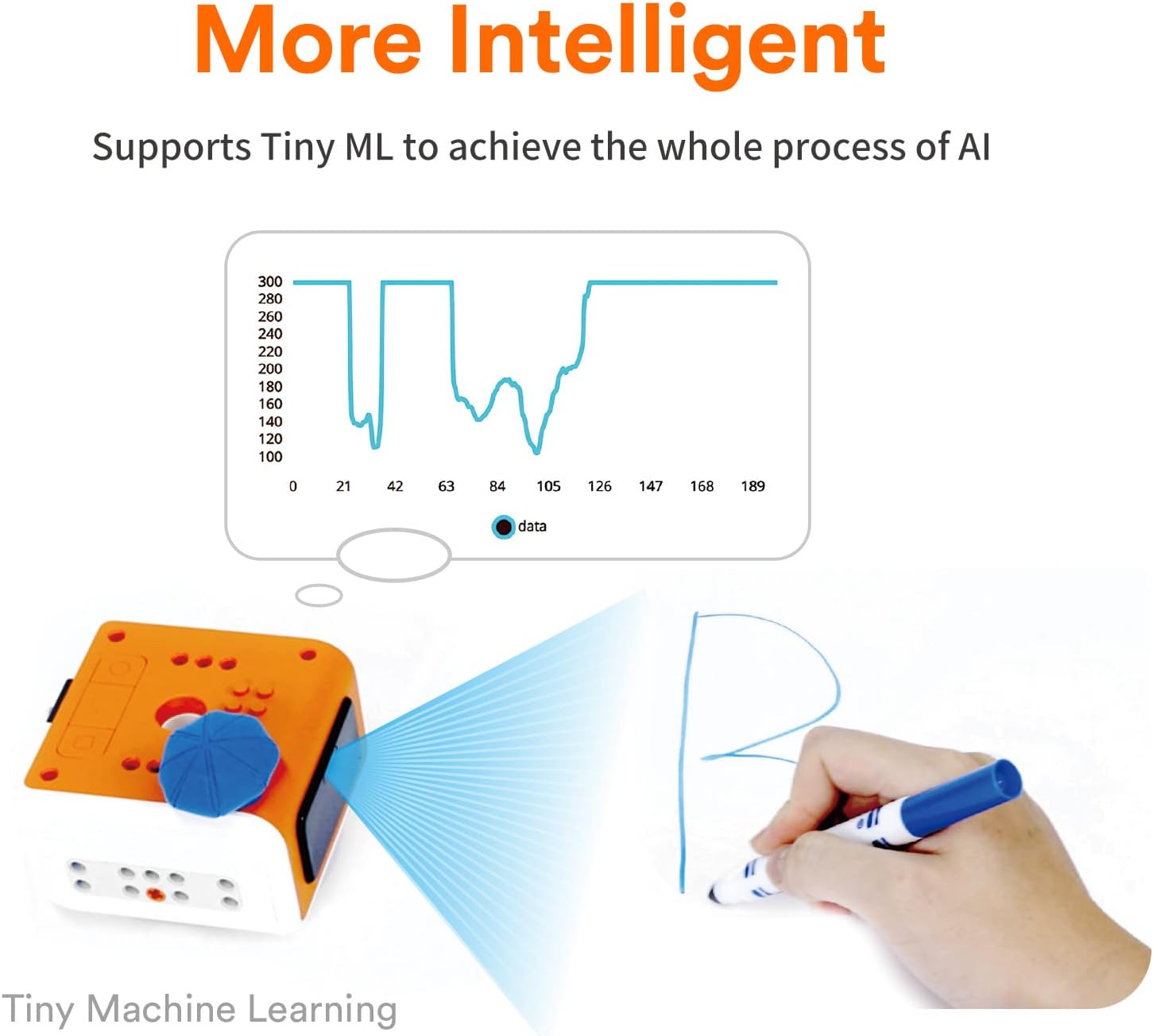
- Supports TinyML and IoT for object recognition, weather, cloud computing and connected projects
- Compatible with LEGO, Technic motors and third-party electronic modules
- Multiple VinciBots can be combined for collaborative projects and complex set-ups
- 1500 mAh battery for over 4 hours’ runtime on a single charge
- Motor tested for 3,000 hours, with over 20 certifications and 50,000 impact tests
Straight out of the box, the child places the VinciBot on the line-following track and activates it straight away without any programming. They then slide the washable marker into the holder and programme a few blocks in MatataCode to draw a geometric shape. For more advanced users, they can open the vinci.matatastudio.com platform, select one of the 75 available case studies and programme a TinyML object recognition model from scratch right through to its deployment on the robot.
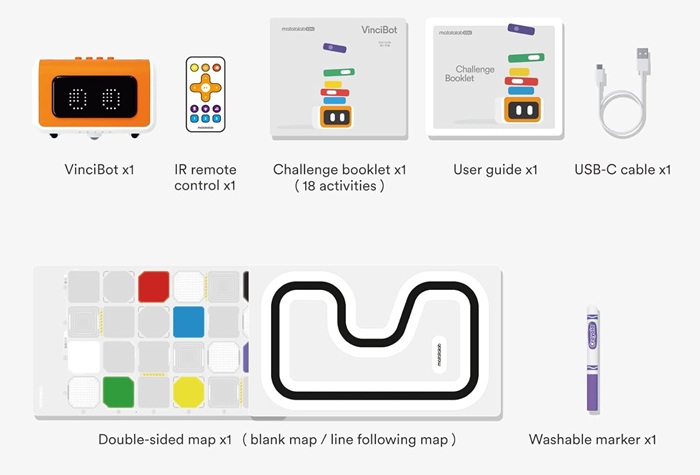
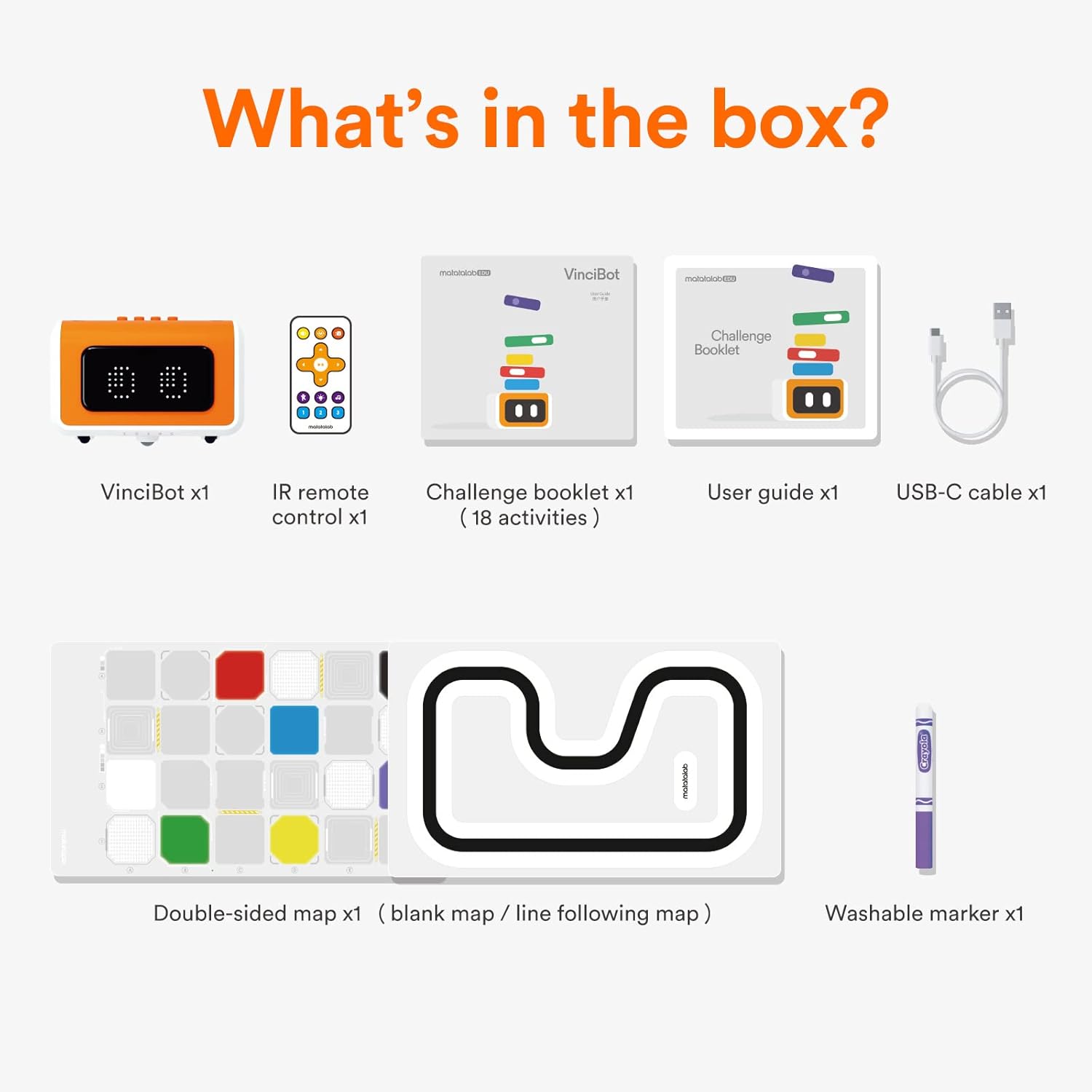
Contents of the MatataStudio VinciBot box
- 1 VinciBot robot
- 1 infrared remote control
- 1 challenge booklet (17 coding scenarios)
- 1 line-following board
- 1 washable marker
Technical specifications of the MatataStudio VinciBot
- Recommended age: 8 years and over
- Sensors: 8
- Sounds: 21 musical instruments
- Display: LED matrix, patented RGB structure
- Pre-configured modes: line following, precision drawing, infrared remote control
- Programming: Scratch (blocks), Python
- AI technologies: TinyML, IoT
- Platform: vinci.matatastudio.com (over 75 projects, free)
- Battery: 1500 mAh, over 4 hours’ battery life
- Motor lifespan: 3,000 hours
- Compatibility: LEGO, Technic motors, third-party electronic modules
- Certification: over 20 professional tests and certifications
- Brand: MatataStudio
- 1 VinciBot robot
- 1 infrared remote control
- 1 challenge booklet (17 coding exercises)
- 1 line-following track
- 1 washable marker