Specialized in the sale of robotic products! educational robots, toy robots, connected objects
- Home >
- Educational Robots >
- THYMIO 2 > Thymio 3 Educational Robot
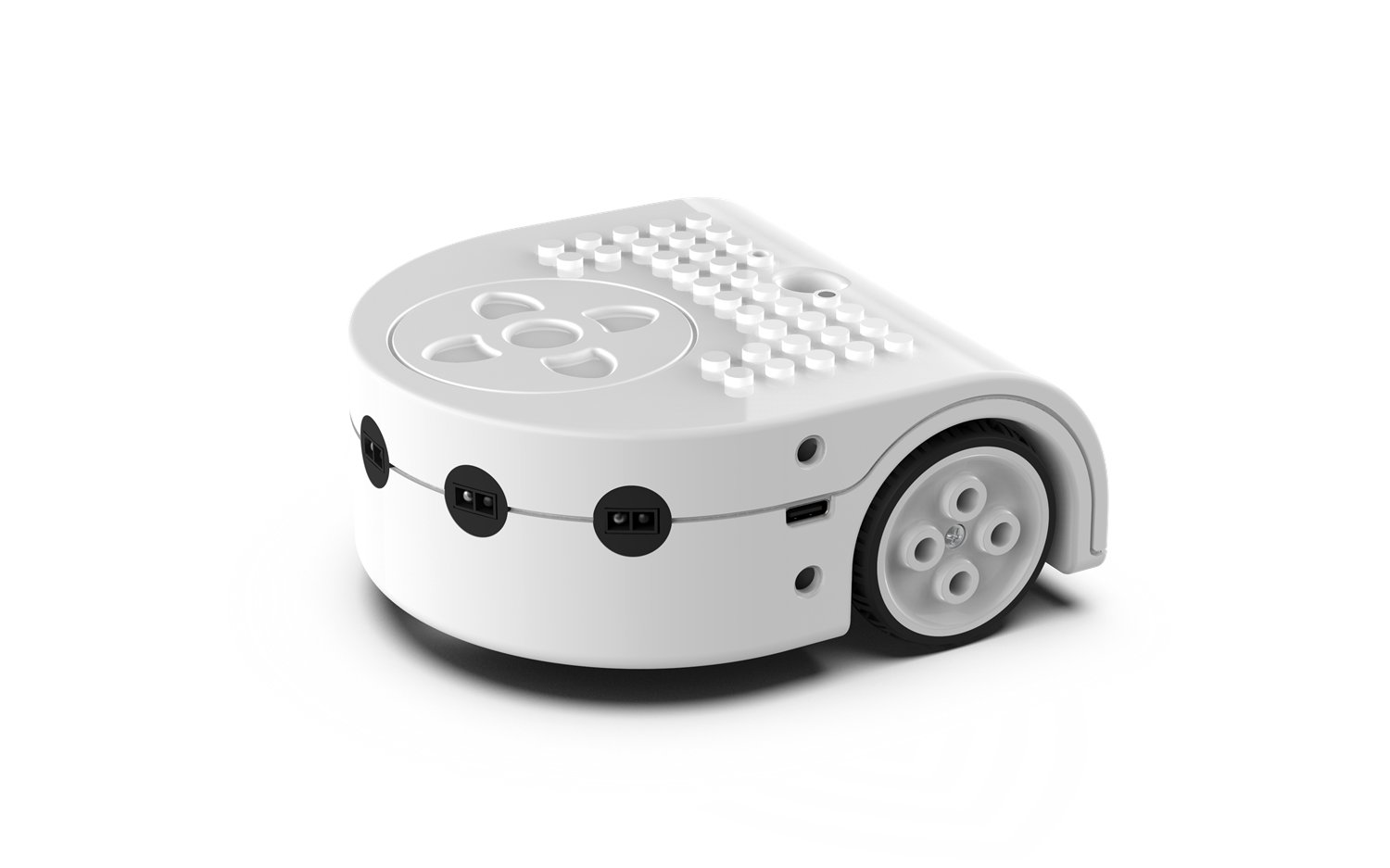

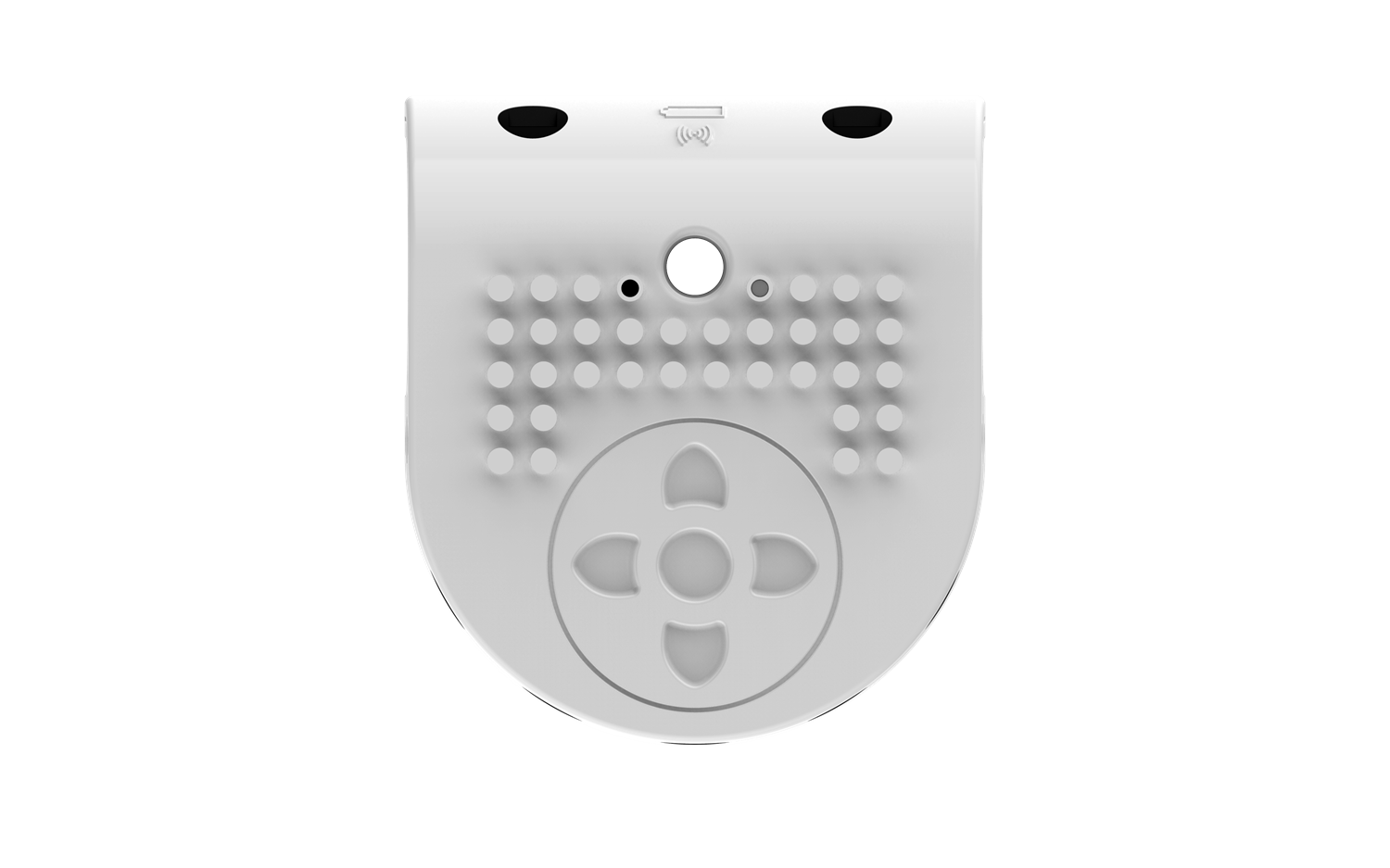
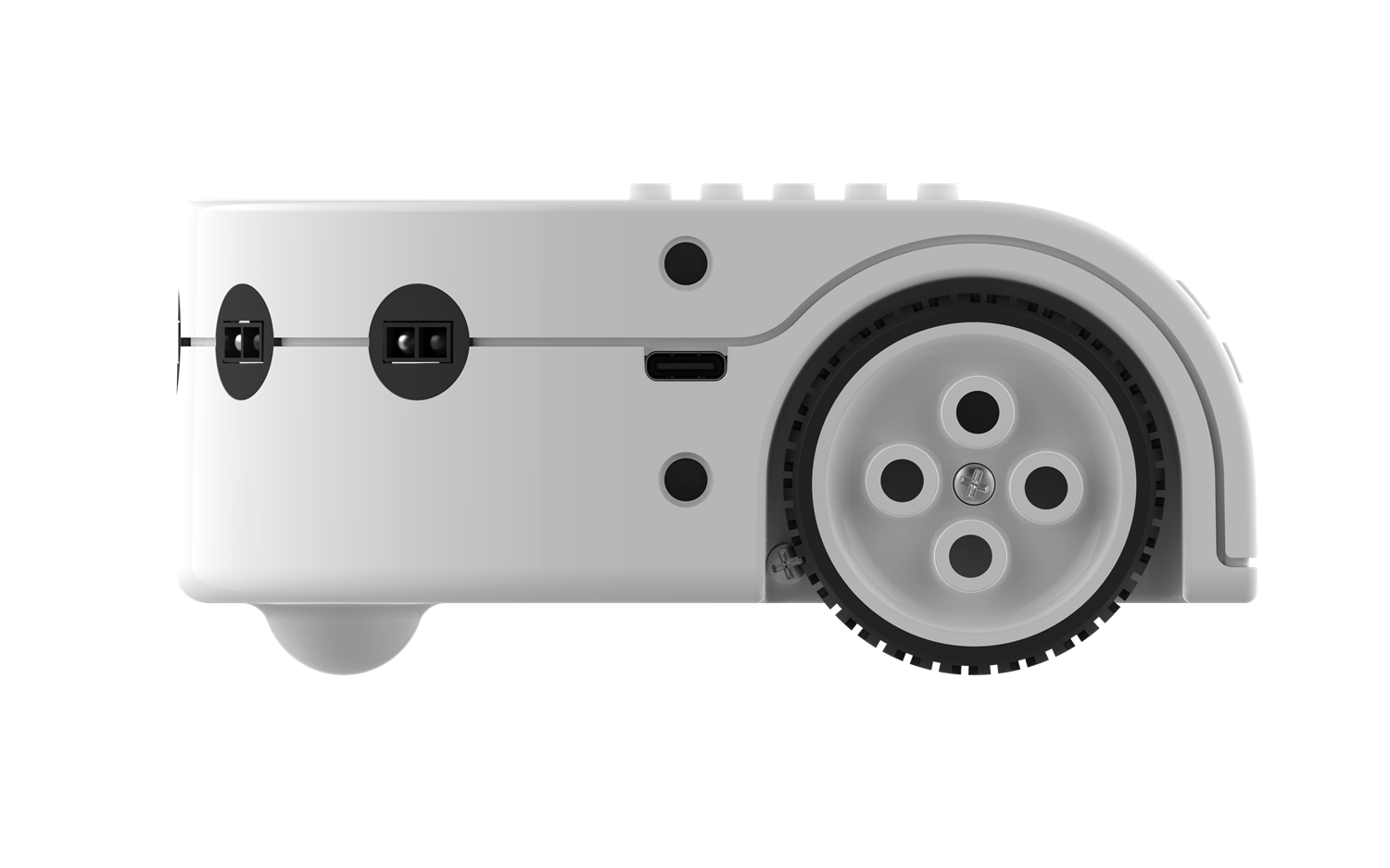
Thymio 3 Educational Robot

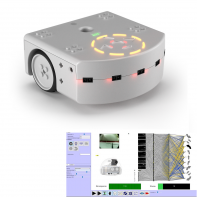
The Thymio 3 is a compact educational robot developed by Mobsya, featuring on-board AI, native MicroPython, a 3-axis gyroscope and accelerometer, an RGB colour sensor, 51 LEDs and 4 built-in behaviours requiring no configuration; it can be programmed via thymio.Lab in Chrome without the need for installation.
Bluetooth, USB-C charging, 3 to 6 hours’ battery life and backwards compatible with Thymio 2.
Thymio 3 Educational Robot with On-Board AI, MicroPython, Gyroscope and 51 LEDs
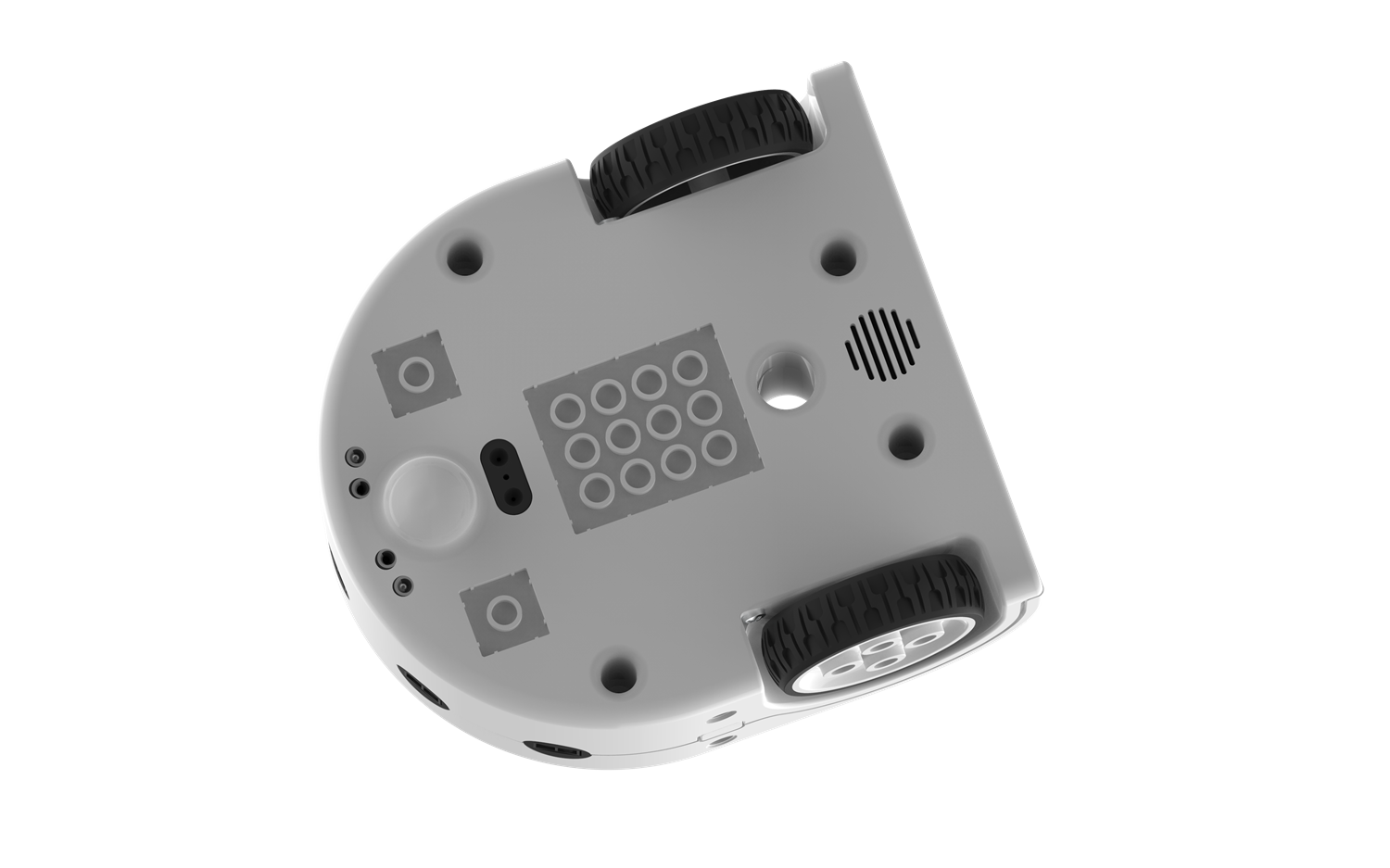
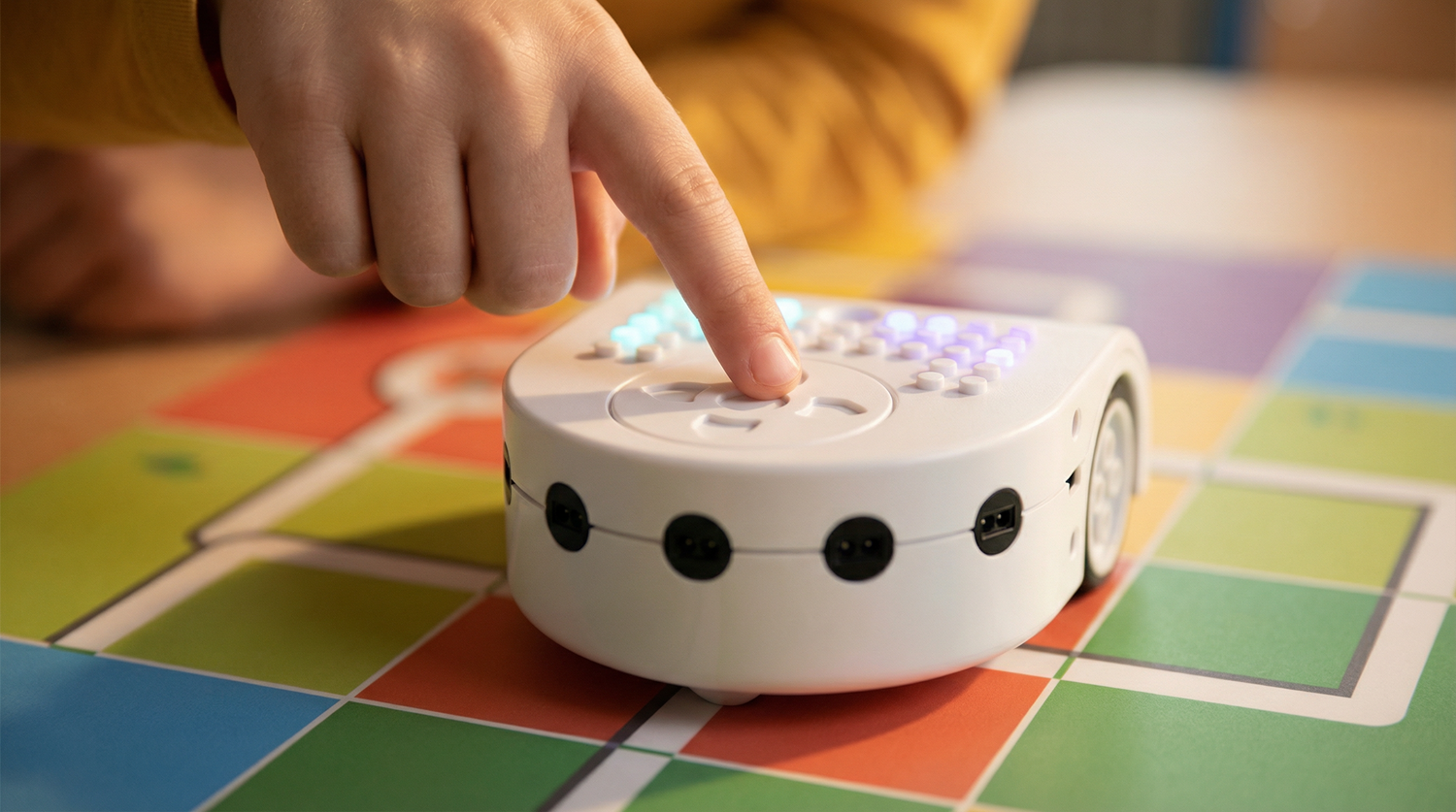
The Thymio 3 is a compact educational robot measuring 107 x 120 x 56 mm and weighing 270 g, developed by the Mobsya association, featuring Bluetooth, USB-C charging and a battery life of 3 to 6 hours. It is equipped with 7 horizontal infrared sensors, 2 ground-mounted IR sensors, a ground-mounted RGB colour sensor, a gyroscope, an accelerometer, a microphone and 5 capacitive buttons, as well as 51 LEDs, 2 DC motors and a speaker.
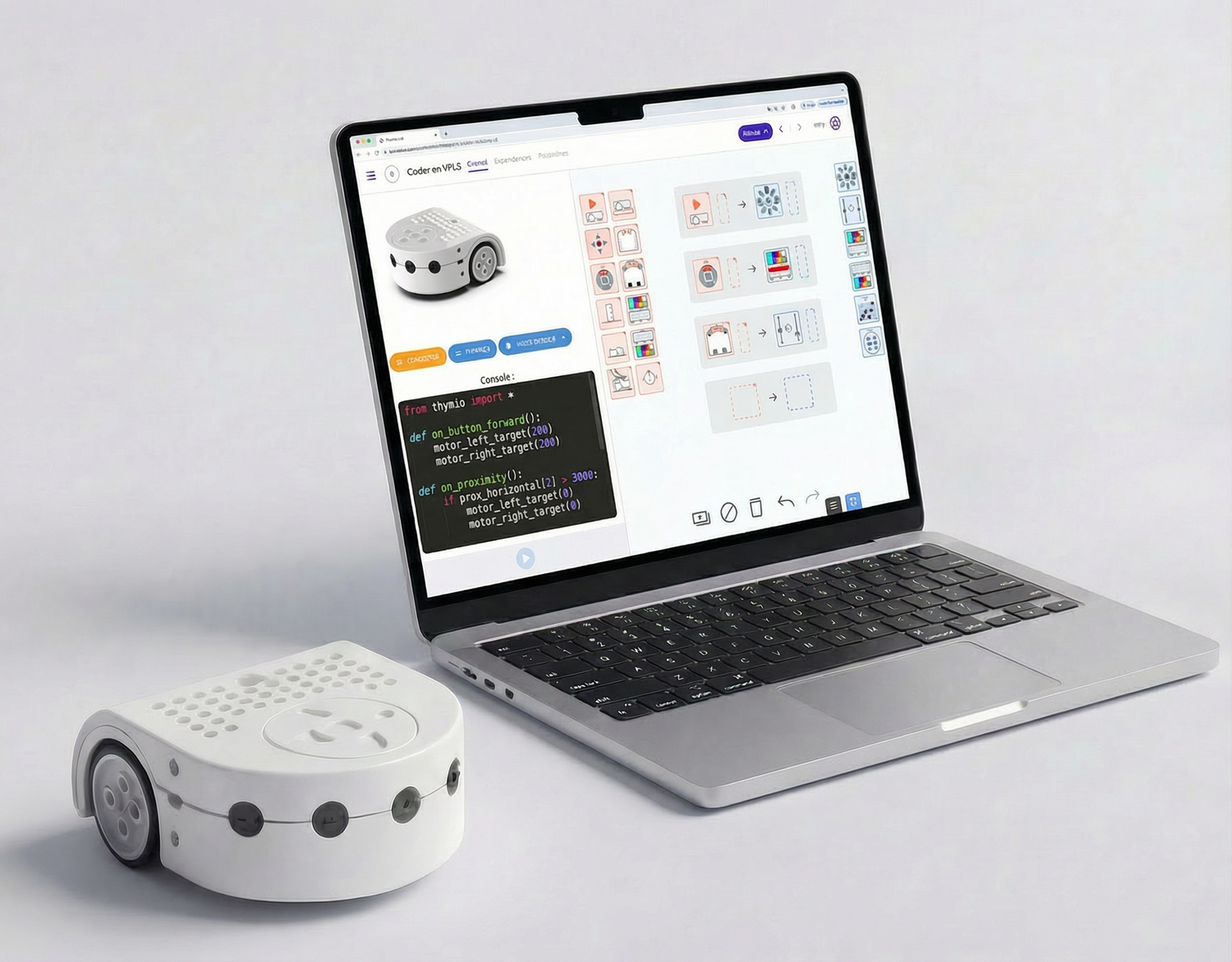
Its key new feature is on-board AI: the ‘ApprenantIA’ behaviour enables the robot to learn to avoid obstacles autonomously, in a way that can be observed in real time. Three other behaviours are built in and require no configuration: ‘Automate’ (path recording), ‘Musician’ (colours as musical notes) and ‘Artist’ (geometric shapes using a gyroscope). Programming is carried out via the thymio.Lab platform, accessible in Chrome without installation, using vpl.Lab (visual, suitable for ages 6 and over), Scratch.Lab (blocks) or py.Lab (native MicroPython). The platform is compatible with Thymio 2 and available in French, English, German and Italian.
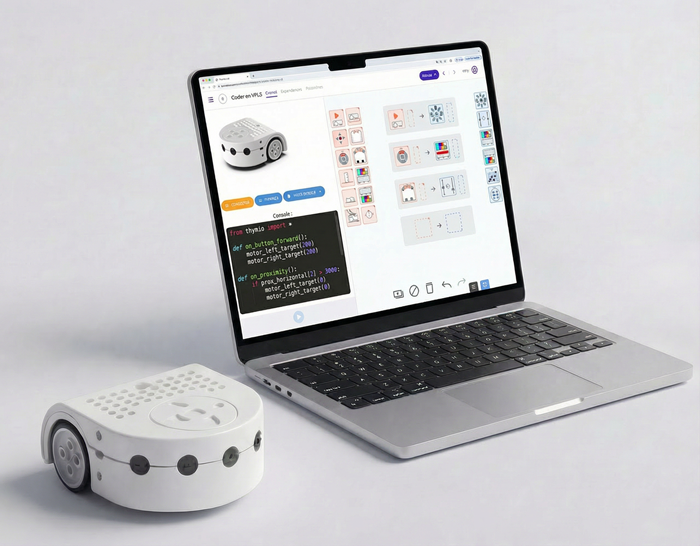
Thymio 3 educational robot with on-board AI, native MicroPython, 3-axis gyroscope, colour sensor, 51 LEDs and the thymio.Lab platform requiring no installation, suitable for ages 6 and over.
What Thymio 3 brings to the classroom compared to traditional educational robots
- Embedded AI: the ‘ApprenantIA’ behaviour demonstrates how the robot learns to avoid obstacles in real time, through a process of trial and error and gradual progress
- 4 pre-installed behaviours requiring no configuration: Automator, AI Learner, Musician and Artist
- RGB floor-mounted colour sensor for colour-based programming and ‘Musician’ behaviour
- 3-axis gyroscope and accelerometer for precise geometric manoeuvres in sequences of up to 16 moves
- Native MicroPython via py.Lab for advanced students, with auto-completion and full access to sensors
- Dedicated audio chip, MP3 playback, improved speaker and internal memory for recording and playing back sounds
- 51 LEDs: 2 x 8 matrix, chassis RGB LEDs and sensor feedback LEDs
- The thymio.Lab platform in Chrome – no installation required; compatible with tablets, Chromebooks and PCs
- Backwards compatible with Thymio 2, wireless firmware updates
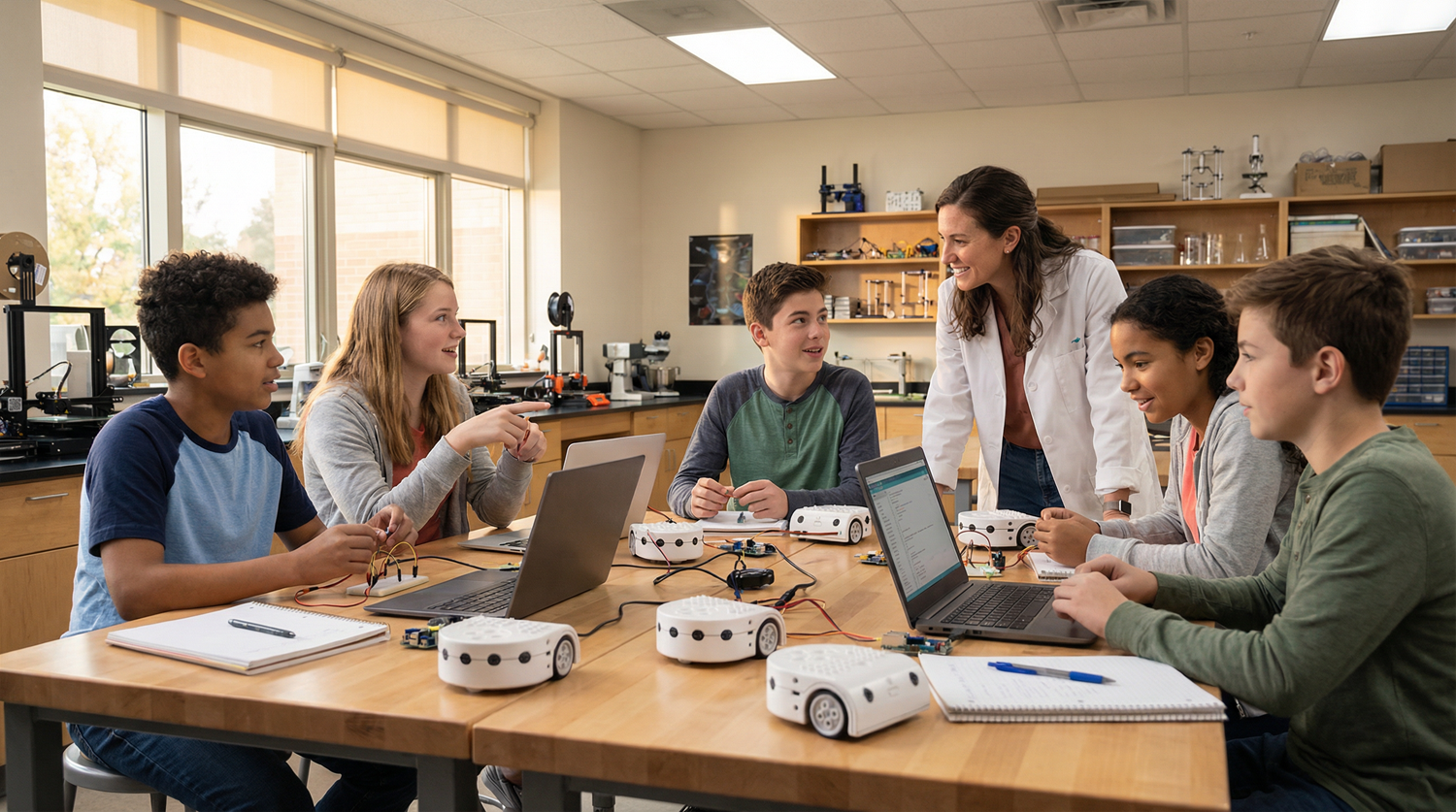
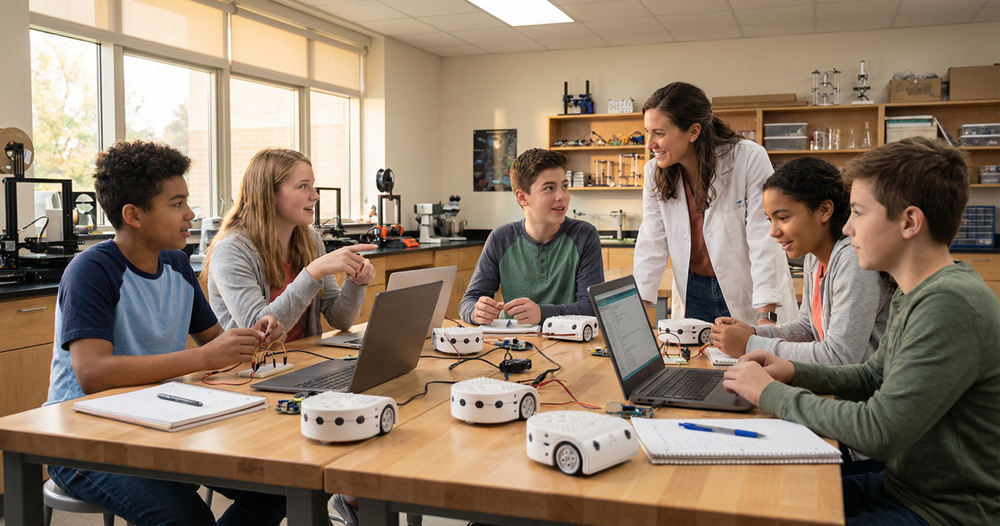
In primary school, pupils launch the ‘ApprenantIA’ behaviour and watch Thymio 3 test out trajectories, correct its mistakes and improve its behaviour as it moves from obstacle to obstacle. In secondary school, they move on to scratch.Lab to programme their own block-based sequences. In sixth form, py.Lab gives them access to native MicroPython for more complex projects with direct access to all the sensors. The thymio.Lab platform opens in Chrome without the need for any installation, which eliminates IT constraints in the classroom.
Contents of the Thymio 3 box
- 1 Thymio 3 robot
- 1 USB-C to USB-C cable (0.8 m, REACH-certified)
- 1 robotics mat
- 1 user guide
Technical specifications of the Thymio 3
- Dimensions: 107 x 120 x 56 mm
- Weight: 270 g
- Batteries: Li-Po 3.7V / 1500 mAh
- Charging: USB-C
- Battery life: 3 to 6 hours, depending on usage
- Connectivity: Bluetooth
- Maximum speed: 14 cm/s
- Sensors: 7 horizontal IR sensors, 2 ground-facing IR sensors, 1 ground-facing RGB colour sensor, 1 gyroscope, 1 accelerometer, 1 microphone, 1 IR remote control, 5 capacitive buttons
- Actuators: 51 LEDs, 2 DC motors, 1 loudspeaker
- Built-in behaviours: Automator, AI Learner, Musician, Artist
- Programming: vpl.Lab (visual), Scratch.Lab (blocks), py.Lab (native MicroPython)
- Platform: thymio.Lab, in Chrome without installation
- Languages: French, English, German, Italian
- Compatibility: Thymio 2, vpl.Lab, scratch.Lab, Aseba
- Brand: Mobsya (Swiss charity)
- 1 Thymio 3 robot
- 1 USB-C to USB-C cable (0.8 m, REACH-certified)
- 1 robotics mat
- 1 user guide

ThymioAI Thymio 2 Wireless Robot And